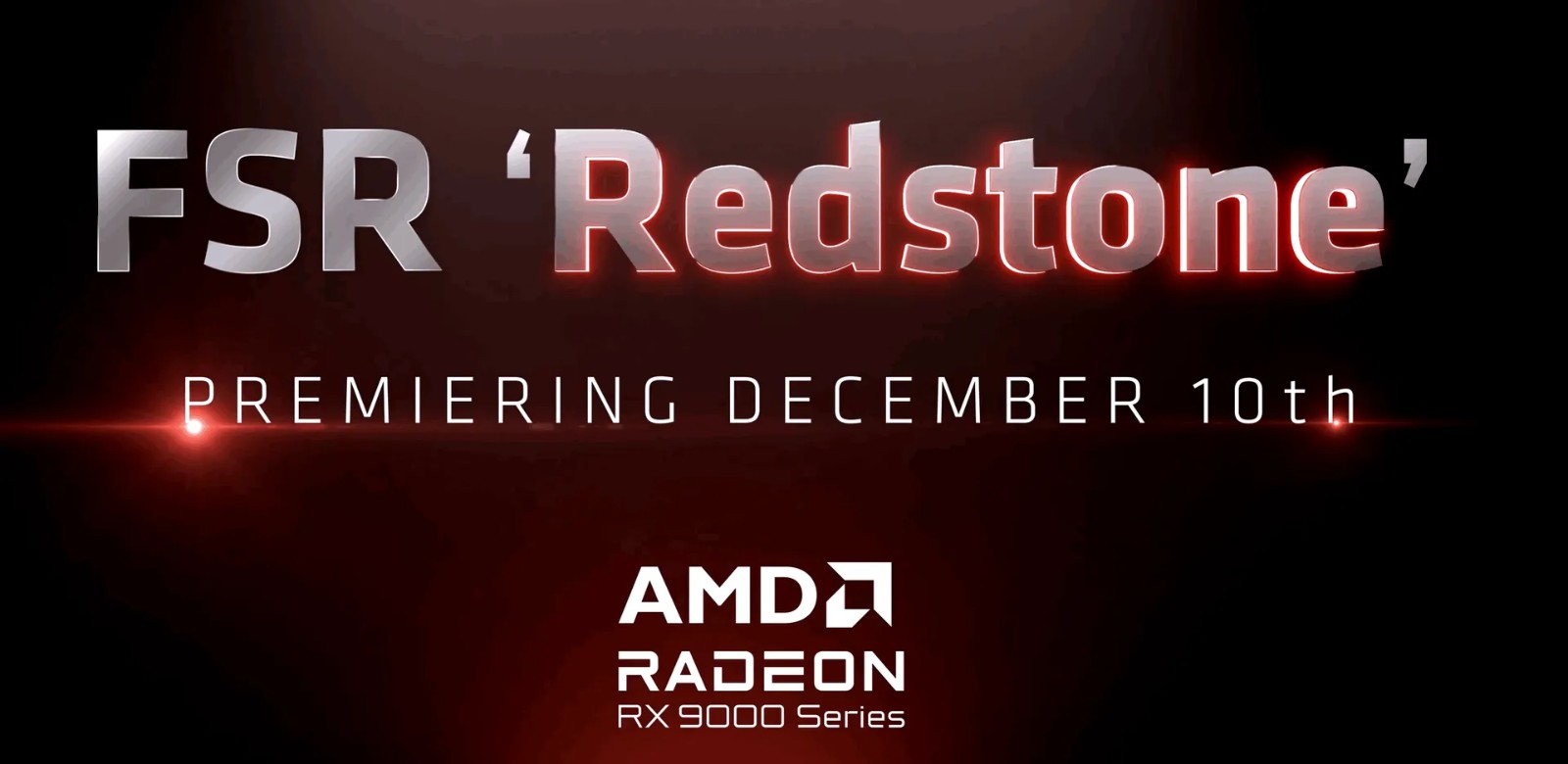
The next generation of FSR technology, FSR Redstone, which was published on COMPUTEX 2025, will import AI-related technology to enhance image performance, and the forecast will be launched in the second quarter of this year, although it has already clearly been outvoked, but the good news is that AMD will release its recognition function on December 10th.
In a post on social networking site X, Jack Huynh, Senior Vice-President and Managing Director of AMD Operations and Displays, wrote: “When the darkness is over, Redstone will begin.” A short preview confirming that FSR Restone will be launched on December 10th.
And from the video, some of the suspected back-up games can be seen, with Victory Time: Black Action 7 in the most visible and visible position, with a high probability of being one of the first games to embrace this technology.
Moreover, given that the FSR Redstone trailer concludes with a special “Radeon RX 9000 Series”, and considering the high degree of binding of new technologies on AI, it is assumed that AMD will, at the technical level, give priority to RX 9000 products, as is the case with FSR 4, and that past products may need to wait for future magic transplants by the great gods if there is an open source.
The AMD FSR Redstone is the basis for FSR 4 to further strengthen AI graphics, import the Neural Radiance Cache, and predict the distribution of light through mechanical learning, thereby preparing the calculations in advance.
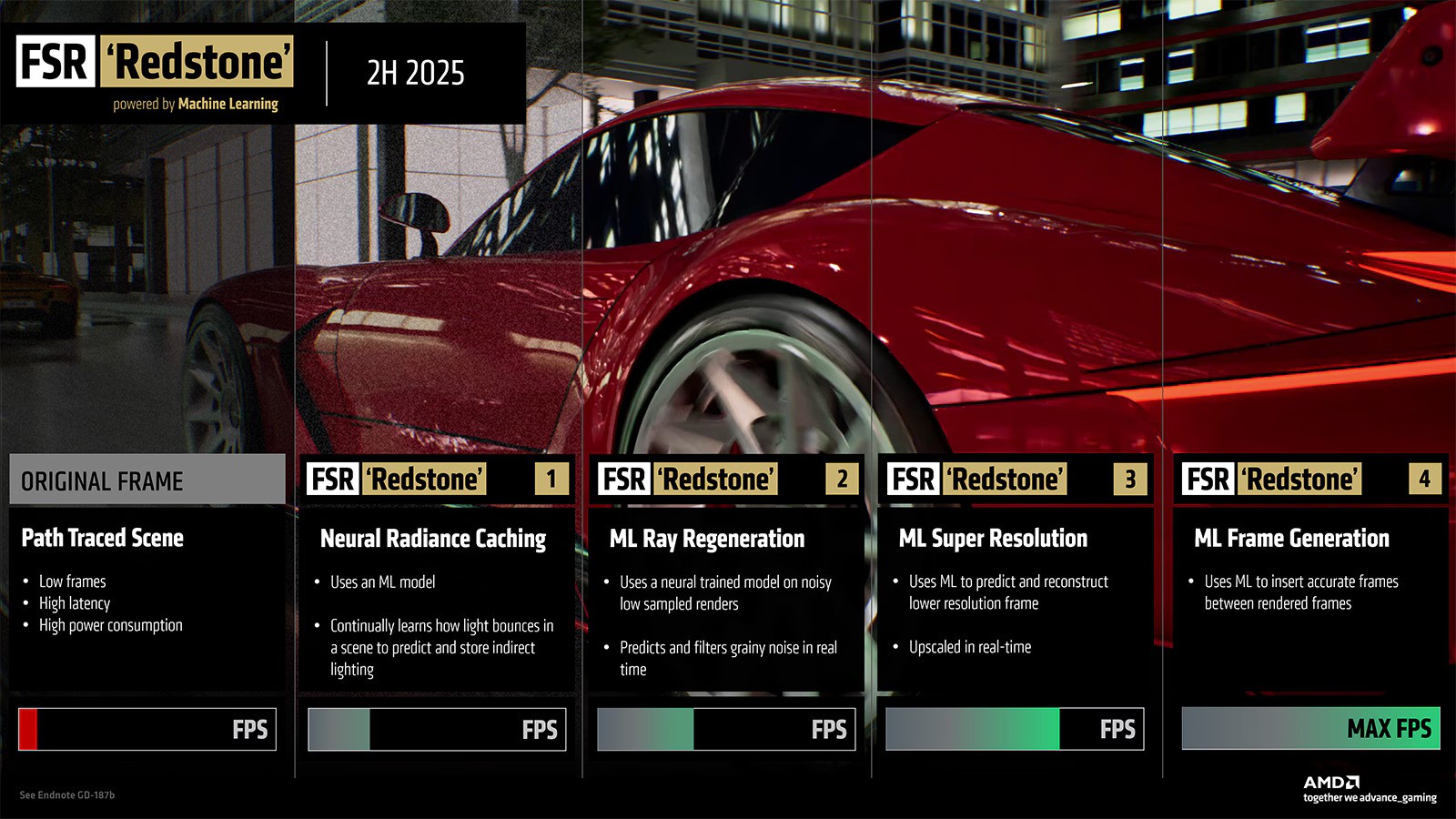
The second function is “Ray Regeneration”, which uses mechanical learning to analyse the reflection of the light path, enhances the performance of the light to track the image, conceptually similar to that of NVIDIA.
Finally, there is a more powerful space-magnification and frame-suppling technology that allows the game, through mechanical learning, to precipitate the image with a smaller resolution, to re-magnify the assigned resolution, to achieve significant savings in the game ‘ s cost and bandwidth, and to increase the smoothness of the game ‘ s experience by adding a higher coding factor.