Since the beginning of the next generation, the price of games has been rising as costs have risen, and major manufacturers, including Sony and Microsoft, are interested in promoting subscription to game services. For Xbox in particular, the Xbox Game Pass (XGP) appears to be more expensive and cost-neutral than PlayStation Plus, with most of the new launches added to the XGP. Thus, the profitability of Xbox Game Pass subscription services and their impact on the game industry have been debated since its launch.
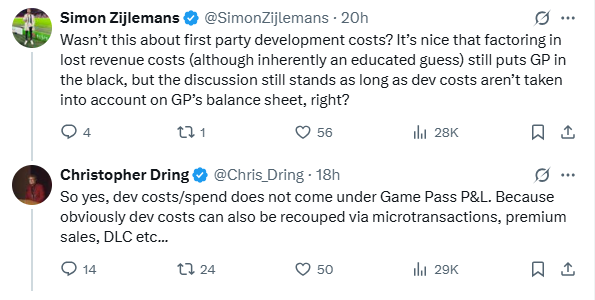
A leading game industry journalist, Chris Dring, founder of The Game Business, released important clarifications and updates today on social media X, citing sources who claim that Xbox Game Pass remains profitable even if the sales lost as a result of joining the XGP are taken into account. This conclusion amends its previous statement that XGP profits are not included in the loss of the first party ‘ s sales of games.
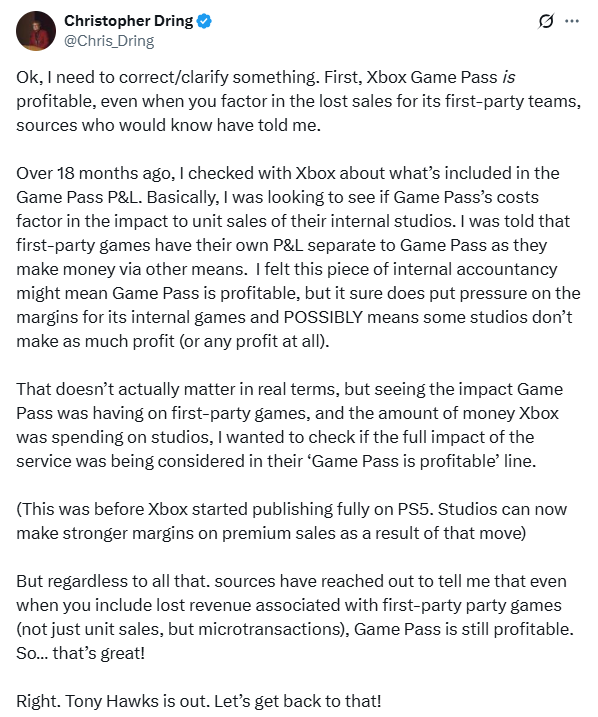
In a tweet dated 8 July, Drin explained that approximately 18 months earlier he had verified with the Xbox side the extent of the XGP gain or loss calculation. The response was that the first party had a profit/loss calculation independent of the XGP, as they also generated income through other channels (e.g., full-cost, cross-platform, DLC, etc.). This means that the XGP itself can be designed to be profitable, but at the same time it may put pressure on the profitability of the first party’s games and even lead to “low or no profits” in certain studios. In particular, Chris Drin noted that the above situation existed mainly before Microsoft began to push the Xbox first game to other platforms (e.g. PS5). Today, the Xbox game studio has been able to gain a higher profit space through “full-priced sales” on other platforms, with the landing of PS5 and more future games. This has undoubtedly improved the overall financial performance of the first game.
Despite the background of historical accounting patterns and strategic shifts, a number of informants with core information approached Drin to provide a clearer picture of the current situation: Even if the first-party (host platform) full-price sales lost as a result of joining the XGP are now included in the calculation, the XGP subscription service as a whole remains profitable.
The industry analysis earlier this year generally found that the full-price sales on the Xbox mainframe platform for XGPs could be lost up to 80 per cent of the expected value. Recent examples of this influence are the first party, such as The Senna Sword of Hell 2: The Sacrificial Sword, the Treasure of the Treasures: The Circle of the Ages, and others, which have been shown on the Xbox platform sales list. On the other hand, the existence of a subscription service may have a positive impact on the sales of non-Xbox platforms (e.g. PlayStation or PC Steam) for a game that is both distributed on a multiplatform and landed on XGP. The exposure and player reputations provided by the XGP sometimes translate into higher sales from other platforms.

The latest information from Drinn indicates that, despite the subversive impact of the XGP model on traditional game sales (especially on a single host platform), after years of operational optimization (including cost control, user growth, adjustments to third-party cooperation clauses) and a recent shift in key cross-platform sales strategies, Microsoft has succeeded in constructing an ecological subscription service that can continue to be profitable even after full consideration of the opportunity costs of first-party content. This strongly supports the long-term viability of the XGP and the viability of the industry subscription model. However, balancing the value of subscription services with the profitability needs of developers (especially the first-party studio) remains a continuing challenge for Microsoft.